
ACM RecSys 2026 in Minneapolis: A note about safety from the organizers
RecSys 2026’s general chairs put out a LinkedIn and WhatsApp note, and it’s one of those posts you read with that little knot in your stomach and then exhale a bit when you reach the end. People have been pinging them about Minneapolis, whether they’re okay, and whether it’s even sensible to plan travel. They basically say: we’re okay, it’s been stressful, we’re watching things closely, and we’re not pretending nothing can happen. That last bit matters. Nobody wants conference leadership to do the “everything is fine” routine when everyone’s feeds are full of the opposite.
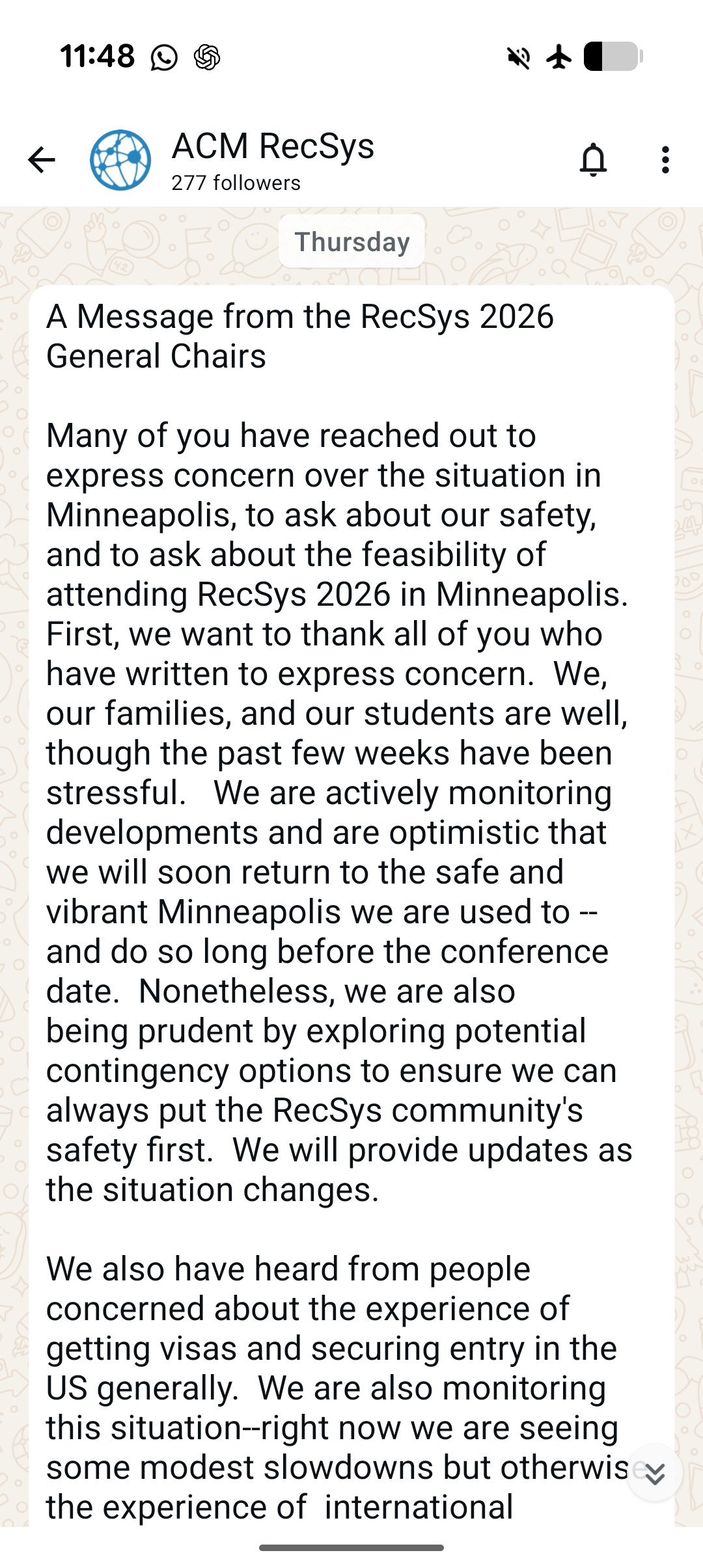
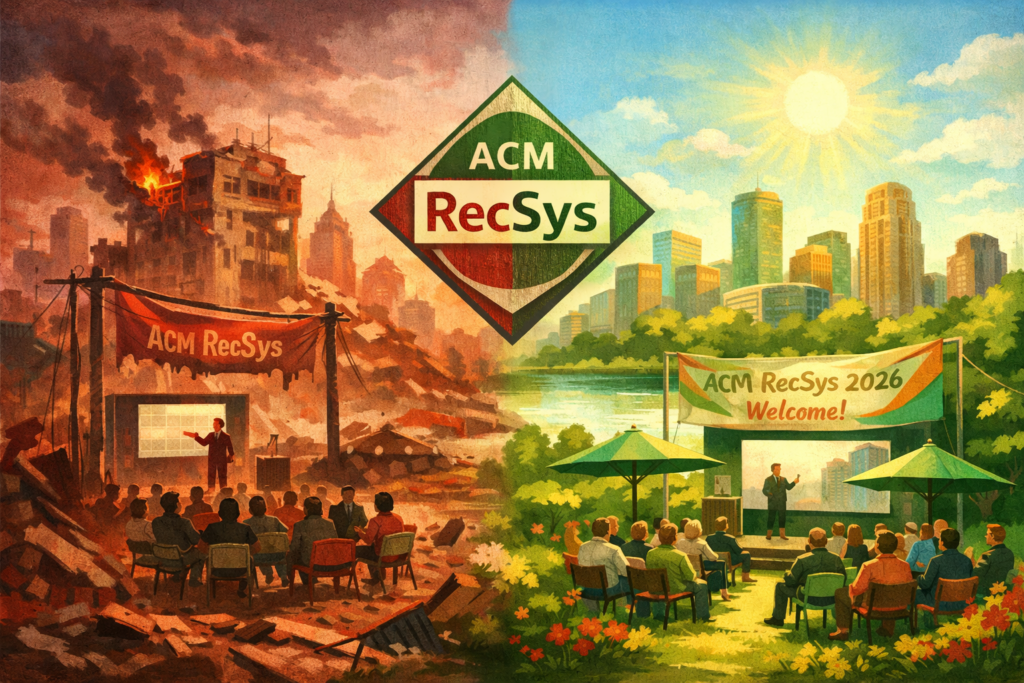
The tone is very “we’re hoping for normal, but we’re planning for not-normal.” They sound optimistic that Minneapolis will be back to the city people know long before late September, but they’re also looking at contingency options with safety as the priority. That’s the only sane posture, honestly. And it’s reassuring to see it stated plainly rather than buried in some FAQ nobody reads.
Then they pivot to the other elephant in the room: getting into the US at all. Even if the conference venue is perfectly calm, the real stress for many colleagues is visas, border checks, and general unpredictability. The chairs acknowledge this directly. They say they’re seeing modest slowdowns, and they’ve already tweaked the timeline so international student volunteers can start visa processes earlier. That’s a practical move, not a grand gesture, but those are the moves that actually help.
The biggest line for me is their promise around accepted papers. RecSys is still intended to be in-person, but if you make a good-faith effort to attend and something blocks you—visa denial, entry issues, comparable obstacles—they’ll make sure you can present remotely. And they’re working toward recorded presentations in the ACM Digital Library plus online Q&A after the conference. This is the sort of thing that used to feel like an exception. Now it’s edging toward being basic conference hygiene.
If you’ve ever chaired a session with a missing presenter, you know how much it messes with everyone: the audience, the session flow, the author’s visibility, the whole vibe. So I’m glad they’re treating “someone can’t travel” as a scenario to design for, not a surprise to apologize for. It’s very recommender-systems of them, actually: assume constraints, build a robust fallback, try to minimize who gets penalized by randomness.
That said, remote presentation is not a magic fix. It keeps the scientific record intact, but it doesn’t replace meeting people, getting pulled into a hallway debate, or the casual “hey, can I pick your brain” chats that turn into collaborations. And the phrase “good-faith effort” is sensible, but also slightly squishy—hopefully they’ll spell out what that means in practice so nobody feels like they have to lawyer their way into being treated fairly.
Still, as conference messages go, this one lands. It’s human, it’s not melodramatic, and it doesn’t dodge the hard parts. If you’re planning for RecSys 2026, the current best strategy probably stays the same: submit your work, keep an eye on updates, and if you’re international, start paperwork early and document everything. And maybe also remember that the field is global now in a way that our conference logistics are still catching up to. This is one more nudge in that direction.
The ACM RecSys Conference introduces major changes to the submission process (no short-papers; response phase; ethics)
RecSys@NeurIPS2020: 4 Papers about Recommender Systems

The first Dutch-Belgian Workshop on Recommender Systems
About The Author

Joeran Beel
I am the founder of Recommender-Systems.com and head of the Intelligent Systems Group (ISG) at the University of Siegen, Germany https://isg.beel.org. We conduct research in recommender-systems (RecSys), personalization and information retrieval (IR) as well as on automated machine learning (AutoML), meta-learning and algorithm selection. Domains we are particularly interested in include smart places, eHealth, manufacturing (industry 4.0), mobility, visual computing, and digital libraries. We founded or maintain, among others, LensKit-Auto, Darwin & Goliath, Mr. DLib, and Docear, each with thousand of users; we contributed to TensorFlow, JabRef and others; and we developed the first prototypes of automated recommender systems (AutoSurprise and Auto-CaseRec) and Federated Meta Learning (FMLearn Server and Client).